Rehabilitation can stall when fear and avoidance begin to shape a client’s daily life more than the injury itself. After a workplace fall caused multiple leg fractures, Caroline* wasn’t just recovering from physical trauma – she was caught in a cycle of anxiety, low mobility and reluctance to move.
Walking and standing on her injured leg felt painful and unstable, and the fear of making things worse meant that she actively avoided loading the leg. Although she understood the importance of her physiotherapy exercises, she rarely completed them, so caught up in her deeply held belief that movement was unsafe.
Fast forward two years and Caroline was still off work, significantly debilitated by her injury. Caroline feared falling even on flat surfaces. She avoided walking without her stick at all costs. She struggled to stand long enough to cook or complete household tasks. With fatigue, low mood and a long list of comorbidities layered on top, rehabilitation felt daunting.
That’s where a fantastic Case Manager identified the potential benefits that an Exercise Physiologist could bring.
Creating Safety at Home: The Foundation for Engagement
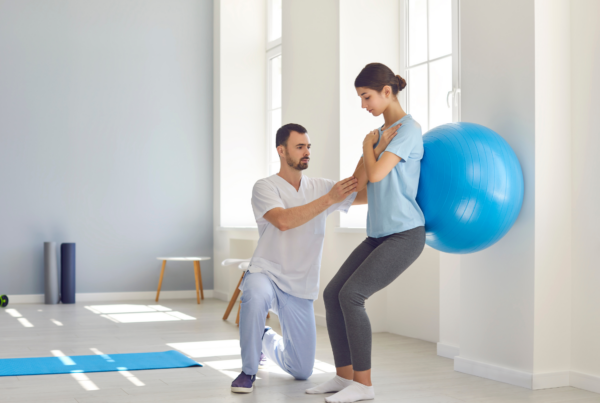
When our EP, Sam, met Caroline he started not with exercises, but with connection. He focused on building rapport, creating a sense of safety and increasing her confidence in exercising. From there, they set goals together – collaborative, clear and centred around the everyday movements that mattered most to her. With this foundation of trust, Sam was able to design an exercise plan that felt relevant and achievable, ensuring she could face the movements she had long been avoiding.
From the comfort of sessions based in her own home, Caroline felt safe enough to try.
To help regulate her anxiety before each session, Sam introduced breathing techniques and visualisation. These tools calmed her nervous system, reduced the “fight-or-flight” response that came with anticipated movement and helped her enter sessions feeling steadier and more in control.
Turning Fear Into Progress Through Graded Exposure
In time, Sam was able to use graded exposure to slowly reintroduce the movements that Caroline had been avoiding for years: walking short distances without her stick, stepping onto uneven surfaces, reaching, bending and climbing stairs. Each task was broken down into steps she could manage. Every small win was celebrated. And each session helped her rewire the belief that movement was dangerous.
For a client like Caroline who knew that exercise was important but avoided it anyway due to fear, these gradual, confidence-building exposures were key. Within a few weeks, Caroline was walking 50 metres without her walking stick, the first of many milestones to come.
Moving Forward With Confidence
In just six sessions, Caroline was making steady progress. Physically, she improved her range of motion and strength, increasing her ability to lift, carry and stand for longer periods.
Movement quality also improved – a reflection of increased confidence to move naturally and without compensation.
Walking capacity increased, both with and without her stick, along with an improvement in cardiovascular fitness.
Perhaps most importantly, she experienced a significant reduction in anxiety and she stopped avoiding the movements she knew she had to do.
Supporting Back Into the Workplace
After only 8 weeks of working with Sam, Caroline felt ready to step back into the work force! While some natural anxiety resurfaced, Sam supported her through the transition and ensured a coordinated return to work by meeting her on her first day back to work.
He walked alongside her from the carpark building to her workstation – an impressive 440 metres, four times further than she had walked in their first assessment! He also had a quick chat with her employer to ensure that her needs were being met.
This partnership ensured that Caroline felt supported both physically and emotionally to re-engage in work.
Why Connection Comes First
Clients with anxiety, avoidance behaviours or low confidence often require more than a standard exercise program. They need trust, psychological safety and structured wins to build trust in their bodies again.
Sam’s approach of a home-based, rapport-driven approach helped Caroline move beyond fear, engage consistently and achieve outcomes she had struggled to reach for over 2 years.
Does Caroline’s story of fear and movement avoidance sound familiar? Reach out for a chat and to see if EP is right for your client.
*name changed for privacy
#exercisephysiology #exerciserehab #rehabilitation #lifeinsurance #incomeprotection #ctp #workcover #mobile #mobileexercisephysiology #fatigue #mentalhealth #cancer #musculoskeletal #injury #pain #physio #physiotherapy #Sydney #Brisbane #Melbourne #Adelaide #Auckland #Waikato #BayofPlenty #Wellington #Otago #Christchurch